
Planning notes, for whenever you need them.
General, practical thinking on the questions couples ask most — not personal claims, just useful starting points before you make a decision.

Before You Propose: Five Things Worth Getting Right
The proposal deserves as much thought as the wedding does — a few practical things worth sorting out before the moment arrives.
How to Choose the Right Celebrant for Your Day
What actually matters when you're comparing celebrants — beyond a nice photo and a friendly bio.

Ceremony vs. Legal Signing: What Couples Need to Know
The bit almost nobody explains clearly until you ask — and by then it's often too late to plan around easily.
Building a Timeline Your Guests Can Actually Follow
Especially useful if your guest list spans cities, countries, or a few very different travel schedules.
Five Questions to Ask Before Booking Your MC
The questions that tell you more about how someone will actually run your room than their reel does.
Before You Propose: Five Things Worth Getting Right
Everyone plans the wedding. Fewer people plan the proposal with the same care — and it's the one part of the day you can't have a coordinator quietly fix in the background. A few things are worth getting right before the moment arrives.
Know exactly where the ring is, at all times. More proposals go sideways over a misplaced ring than almost anything else. Pick one secure spot — a zipped inner pocket, not a jacket pocket that rides up when you kneel — and do a physical check right before the moment, not just a mental one. If you're worried about carrying it yourself, it's fine to have a photographer or trusted friend hold it until the last second.
Hire a photographer, even if it feels unnecessary. It's easy to talk yourself out of this — "we'll just take photos after" — but you don't get a second take on a proposal. A professional positioned out of sight means you get to relive the actual moment, not a re-enactment, and that's worth it long after the day itself is over.
Make the cover story genuinely convincing, not just plausible. Most partners are more perceptive than proposers give them credit for, and a flimsy excuse tends to get noticed well before the moment does. Think through the questions they'd actually ask — why this time, why this outfit, why is everyone acting strange — and make sure the story holds up to a bit of gentle interrogation, not just a first glance.
Build the plan around your relationship, not a template. A sunrise walk, a rooftop, a scavenger hunt — none of these mean anything on their own if they're not actually how the two of you spend time together. If a detail only exists because it's "what proposals look like," it's usually the first thing that feels off on the day. The plan should hold up to the question "would we actually do this anyway?" — if the honest answer is no, it's worth reworking.
Give yourself a fallback for the parts you can't control. Weather changes, a location gets busier than expected, someone's running late. Decide in advance what you'll do if the original plan doesn't quite work — a backup spot, a flexible window of time — so a small disruption doesn't turn into a bigger one.
How to Choose the Right Celebrant for Your Day
Most couples start by looking at photos and a friendly bio — reasonable, but it only tells you so much. A few things tend to matter more once you're actually working together.
Ask how personalised the ceremony really is. Some celebrants work from a fixed script with a few names swapped in; others build the whole thing from scratch around your relationship. Neither is wrong, but it's worth knowing which you're getting before you book.
Ask about the legal side early, not last. A good celebrant should be able to explain — clearly, without jargon — what your ceremony does and doesn't cover legally in your specific location, and what else you'll need to arrange.
Check how they handle nerves and surprises. Rain, a late guest, a mic that cuts out — the day rarely goes exactly to plan. Someone who's comfortable adjusting in the moment matters more than a perfectly rehearsed script.
If your wedding crosses borders or cultures — different countries, faiths, or family traditions — ask directly how they've handled that before, rather than assuming general experience transfers.
Read reviews for specifics, not superlatives. "He was amazing" is nice to read but tells you little. Look for mentions of how someone handled the actual logistics of the day.
Ceremony vs. Legal Signing: What Couples Need to Know
This is the question that trips up more couples than almost anything else in planning: does the ceremony itself make the marriage legal?
In most places, an independent celebrant's ceremony — however beautiful, however heartfelt — is not what makes a marriage legally binding on its own. That's true broadly across the UK, Canada, and the Philippines, though the exact process differs by jurisdiction. Usually, couples pair their ceremony with a separate, short legal appointment: sometimes a registry office signing, sometimes a licensed officiant completing specific paperwork, done either just before or just after the ceremony itself.
The practical upshot: figure out the legal requirement for your specific location first, then plan the ceremony you actually want around it — rather than assuming the two are automatically the same thing. A celebrant worth hiring should be able to walk you through exactly what applies to your situation, not just point you at a government website and wish you luck.
It's a bit of extra admin, but it's usually far less stressful than it sounds once someone lays out the steps clearly.
Building a Timeline Your Guests Can Actually Follow
There are really two timelines to plan: the months-out sequence that gets you to the wedding day, and the hour-by-hour schedule that runs on the day itself. Get the first one in a sensible order and the second one gets much easier to build.
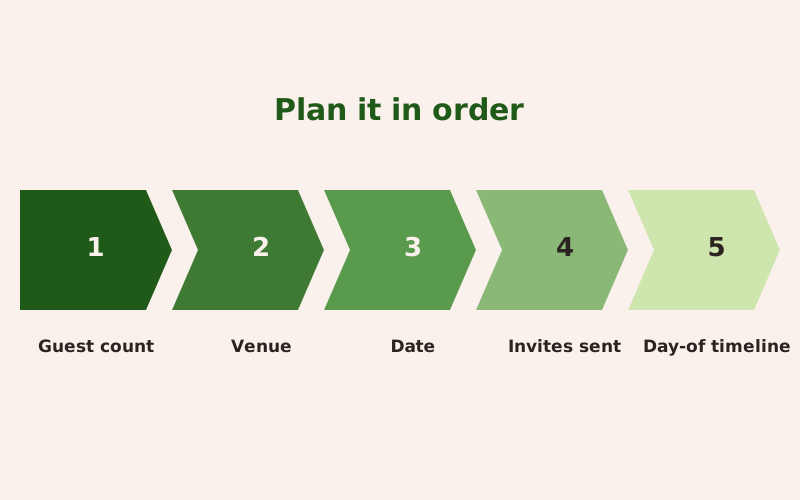
1. Guest count, roughly, before anything else. Almost every other decision — venue size, budget per head, even whether a date is realistic — depends on this number. Nail down a rough range early, even if the final list shifts later.
2. Venue, once you know roughly how many people you're planning for. Venues book up far in advance, and the venue often decides your date more than the other way around — many couples end up choosing from whichever dates the venue has open.
3. Date, once the venue is locked in. From there, everything else — vendor bookings, travel for out-of-town guests, the legal appointment if you need one — can be scheduled backward from a fixed day.
4. Invites sent, with enough runway for travel. If any guests are flying in or crossing time zones, get invitations out earlier than feels necessary — they need time to book flights and request time off, not just RSVP.
5. The day-of timeline, last. This is the hour-by-hour schedule — ceremony, photos, reception — and it's much easier to build once the big-picture decisions above are already settled. A few habits tend to keep it from quietly falling apart by 4pm:
Build in more buffer than feels necessary. Photos run long, cars hit traffic, someone's speech runs an extra five minutes. Ten to fifteen minutes of slack between major segments absorbs most of the day's small delays before they compound into a big one.
Think about your guests' journey, not just the schedule. If people are travelling in from different cities or countries, or juggling flights and time zones, give them more notice than you think they need — and be explicit about what's optional versus expected.
Put one person in charge of the clock. Whether that's a coordinator, an MC, or a trusted friend, the timeline works far better when one person owns it on the day, rather than being everyone's shared responsibility (which usually means nobody's).
Share the timeline with your vendors, not just your wedding party. Caterers, photographers, and musicians all work better when they know what's coming next instead of guessing.
Five Questions to Ask Before Booking Your MC
A demo reel shows you someone's energy. It doesn't show you how they'll actually run your room. These questions tend to get closer to that.
1. How do you handle a timeline that starts slipping? Every MC says they'll "keep things on track" — ask what that actually looks like when speeches run long or dinner service is delayed.
2. Will you also run the ceremony, or just the reception? If you want one consistent tone across the whole day, it's worth knowing upfront whether that's even an option with them.
3. How do you read a room that's mixed — different ages, cultures, energy levels? A good answer sounds specific, not just "I read the crowd."
4. What's your plan if something goes wrong with the mic, the music, or a surprise guest? You want someone who's visibly unbothered by this question.
5. Can I see how you've handled a wedding similar to mine? Similar guest count, similar formality, similar cultural mix — general experience is good, relevant experience is better.
Have a question these didn't answer?
A free 30 minute call is a good way to talk it through directly.
Book your free call